

Fire Damage Restoration in Baltimore, MD
- 24/7 Fire Damage Assistance
- Smoke & Soot Cleanup
- Residential & Commercial Properties
- Restoration & Reconstruction Support
Get An Estimate
Restore Your Property After Fire and Smoke Damage
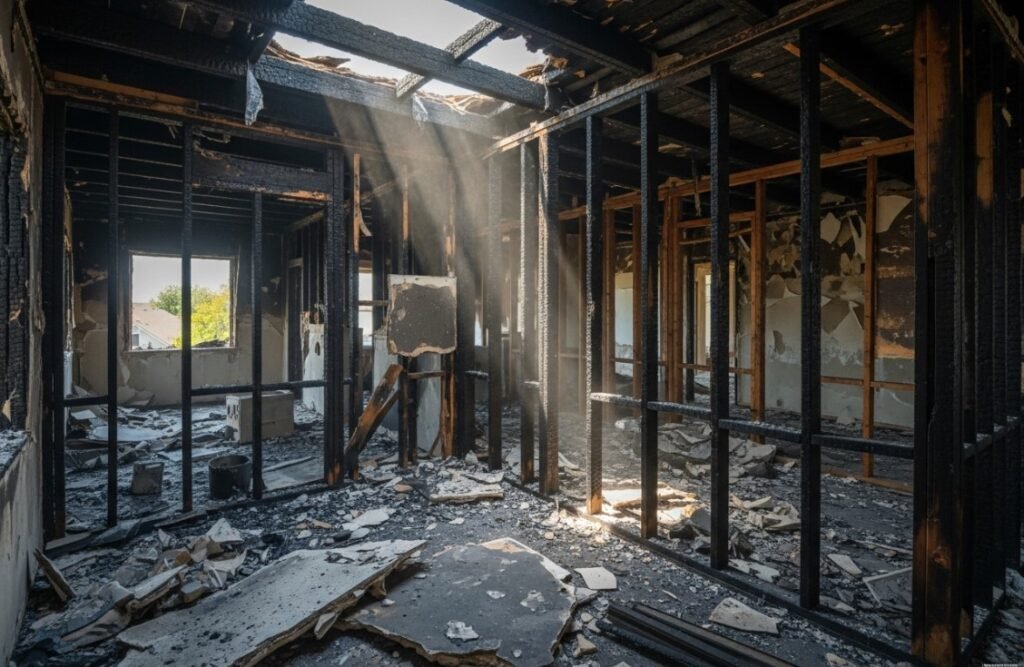
Once the fire is extinguished and the property is safe to access, the recovery process can begin. Burned materials may be the most obvious concern, but smoke residue and soot can travel into rooms and surfaces beyond the original fire area.
Restoration Guru helps homeowners and businesses in Baltimore, Maryland, understand the condition of fire-affected spaces and plan the work needed for recovery. Our approach considers visible damage, smoke impact, affected materials, and repair needs before restoration moves forward.
What Types of Damage Can a Property Fire Leave Behind?
Fire damage is rarely limited to burned surfaces. Different forms of damage may affect the property at the same time, and each can require a different restoration approach.

Structural Fire Damage
Heat and flames may damage walls, ceilings, framing, and other building components.

Smoke Damage
Smoke can move into nearby rooms and settle on walls, ceilings, furniture, and other surfaces.

Soot Residue
Fine soot particles may collect on materials throughout the property and require appropriate cleaning methods.

Persistent Smoke Odors
Smoke odors can remain in porous materials and enclosed areas after visible debris has been removed.

Water Damage After Firefighting
Water used during firefighting may leave flooring, drywall, and other building materials wet or damaged.

Damaged Contents
Furniture, personal belongings, and business contents may require evaluation to determine what can be cleaned.
What Should You Do After a Fire Damages Your Baltimore Property?

Wait Until the Property Is Cleared for Entry

Avoid Touching Soot-Covered Surfaces

Document Visible Property Damage

Contact Your Insurance Provider

Arrange a Fire Damage Assessment

Fire Damage Cleanup and Restoration Services in Baltimore, MD
Recovering a fire-damaged property may involve several stages of work. The services required depend on the extent of the fire, how smoke traveled, and which materials were affected.

Fire Damage Cleanup
Damaged areas are evaluated and prepared for the appropriate cleanup and restoration work.

Odor Treatment
Smoke-related odors in affected spaces and materials are addressed as part of the recovery process.
Fire-Related Water Damage Cleanup
Moisture left after firefighting activities can be addressed when water has affected the property.
Smoke and Soot Cleanup
Affected surfaces are addressed based on the type and extent of smoke or soot residue present.

Contents Evaluation and Cleaning
Affected belongings and contents can be reviewed to determine appropriate cleaning or restoration needs.
Reconstruction Services
Areas that cannot be restored through cleaning or repair may require rebuilding or reconstruction.

How We Approach Fire Damage Restoration in Baltimore?
Every fire affects a property differently. Our restoration approach is based on the damaged areas, the movement of smoke and soot, and the repairs needed to return affected spaces to a usable condition.

Step 1: Fire Damage Assessment
We review fire-affected areas and evaluate visible damage, smoke impact, and restoration needs.
Step 2: Secure & Clean the Property
The property is secured while smoke, soot, and damaged materials are addressed.
Step 3: Odor Removal & Restoration
Fire odors are treated, and affected areas are restored as work progresses.

Step 4: Repairs & Reconstruction
Damaged structures and finishes are repaired or rebuilt as needed.

Step 5: Final Inspection
The completed restoration is reviewed to ensure the project scope is met.

Why Baltimore Property Owners Choose Restoration Guru?

24/7 Fire Damage Assistance
Our team is available for urgent fire damage restoration needs.

Fire and Smoke Damage Evaluation
We consider visible fire damage as well as smoke and soot impact throughout affected areas.

Clear Recovery Planning
Property owners receive understandable information about the restoration work and recommended next steps.

Cleanup Through Reconstruction
Our restoration and reconstruction capabilities help support multiple stages of property recovery.
What Should You Know About Fire Damage Insurance Claims?
Insurance coverage and claim requirements can vary based on the policy and circumstances of the fire. After reporting the loss, your insurance provider may request information about damaged areas, affected contents, and restoration work.
Keeping photographs, records, and relevant project documentation organized may help during the claims process. Restoration Guru can provide restoration-related project information connected to the work performed. Questions about coverage, claim approval, or policy limits should be discussed directly with your insurance provider.
Frequently Asked Questions About Fire Damage Restoration
What does fire damage restoration include?
Fire damage restoration may include property assessment, smoke and soot cleanup, odor treatment, contents evaluation, repairs, and reconstruction based on the extent of the damage.
How soon should fire damage cleanup begin?
Fire damage should be assessed after emergency authorities have cleared the property for safe access. Early evaluation can help identify cleanup and repair priorities.
Can smoke damage affect rooms where there was no fire?
Yes. Smoke can travel beyond the original fire area and leave residue or odors on surfaces in other parts of a property.
Can smoke odor be removed after a house fire?
Does fire damage restoration include soot cleanup?
Fire restoration may include soot cleanup when residue has settled on walls, ceilings, contents, or other affected surfaces.
Does homeowners insurance cover fire damage restoration?
Coverage depends on your insurance policy and the circumstances of the loss. Contact your insurance provider to confirm coverage and claim requirements.
How long does fire damage restoration take?
The timeline depends on the extent of fire and smoke damage and whether repairs or reconstruction are required. Larger restoration projects generally take longer.